Free tinnitus tools

What does your
tinnitus sound like?

Use our free tone-matching tool to identify the pitch of the ringing or buzzing in your ears โ€” then try our sound therapy generator to find relief. Both tools run entirely in your browser with nothing stored.

๐ŸŽงTone matcher โ€” find your exact frequency
๐ŸŒŠSound therapy โ€” noise & binaural beats
๐Ÿ”’100% private โ€” nothing is recorded
Open Tone Tool Sound Therapy โ†“
Hear the difference

What does tinnitus sound like?

Tap any card below to hear a short approximation of that tinnitus type. Lower your volume first. These help you identify which category best describes your experience before using the tone tool.

These are rough approximations only โ€” your tinnitus may differ. Each plays for 4 seconds then stops. Use the full tone tool below to find your precise frequency.

Understanding tinnitus

Common, but it deserves proper attention

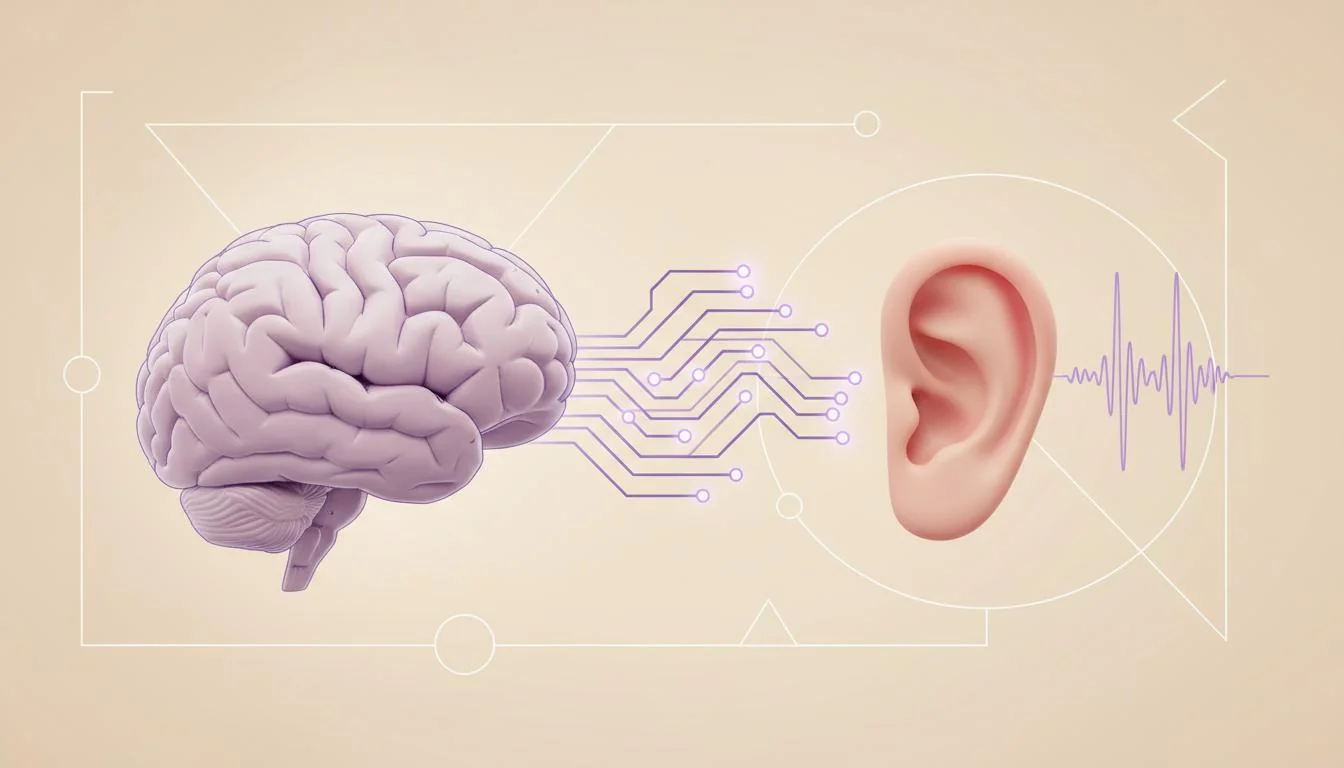
Tinnitus is the perception of sound โ€” ringing, buzzing, hissing or humming โ€” when no external sound is present. It affects around 1 in 7 adults in the UK and ranges from mildly noticeable to deeply disruptive, particularly when it affects sleep or concentration.

One of the first steps towards understanding your tinnitus is identifying what it sounds like and at what frequency. This matters because different frequency ranges suggest different underlying causes, and it helps clinicians give more targeted advice.

That is exactly what the tone-matching tool on this page is for โ€” and it is completely free to use.

๐Ÿ””

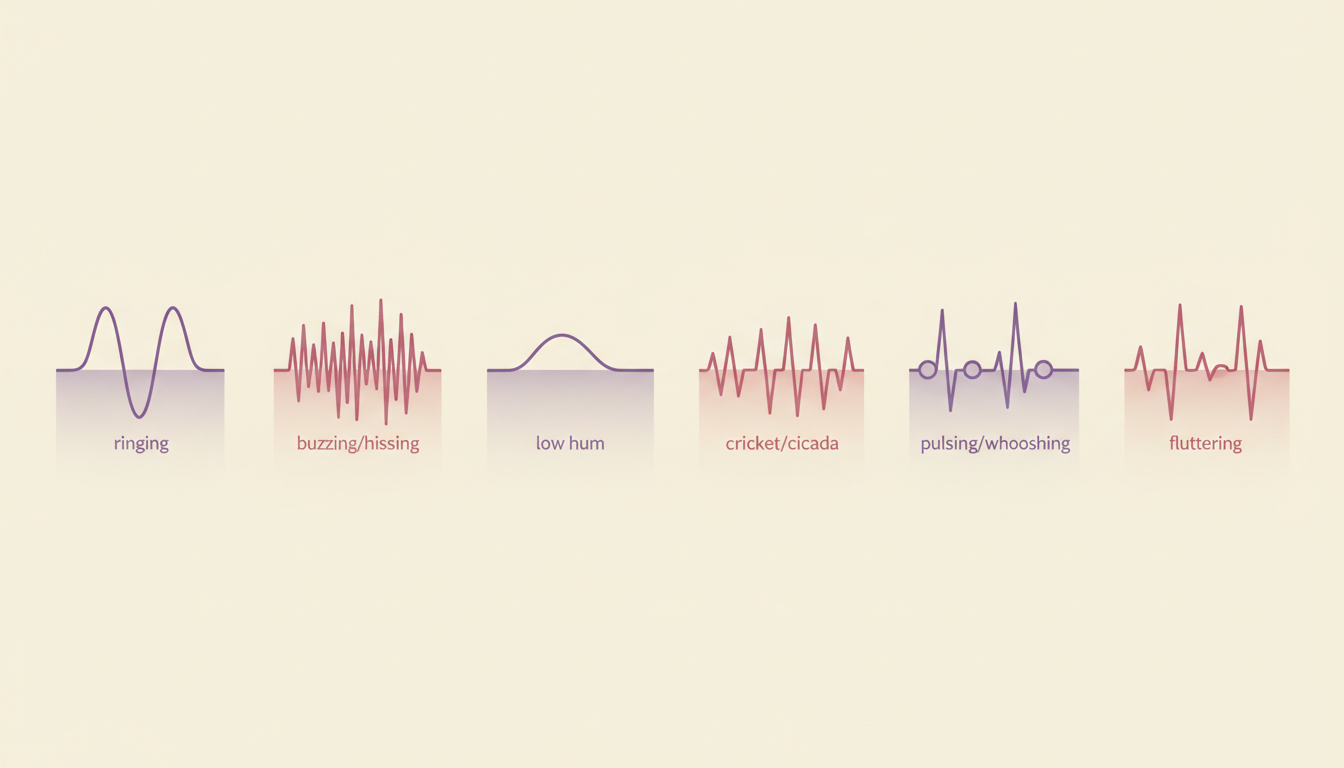
Ringing

Often high-pitched, 4โ€“8 kHz. Commonly linked to noise exposure or age-related hearing change.

ใ€ฐ๏ธ

Buzzing or hissing

Can sound like static or electrical interference. Often associated with ear wax or middle ear issues.

๐Ÿ”ˆ

Low hum

A deeper resonant sound โ€” like a distant engine. Typically 100โ€“500 Hz. May have dietary or vascular causes.

๐ŸŽต

Musical tones

Less common but real. Repeating tunes or tonal patterns. Often linked to significant hearing loss.

Before you start

How to use the tone tool

1

Put on headphones or earphones

Headphones give the most accurate result and let you isolate each ear. Over-ear headphones are ideal but earphones work well too.

2

Set a comfortable volume โ€” start very low

Begin around 20โ€“30%. You are matching your tinnitus, not masking it. A tone that is too loud can temporarily worsen symptoms.

3

Select the ear where tinnitus is loudest

Use the channel selector to route the tone to your left ear, right ear, or both. This helps you compare directly with what you hear.

4

Adjust until the tone matches

Use the preset buttons to find your general range, then fine-tune with the slider. Try different waveforms โ€” sine is smoothest, sawtooth is more buzzy.

5

Copy and share your result

Use the Copy Link button to save your exact settings โ€” frequency, waveform and channel โ€” to share with your GP, audiologist or ear nurse.

โš 

Safety reminder: Keep volume low at all times. Never use at high volume โ€” loud tones can temporarily worsen tinnitus. If your symptoms worsen significantly or you feel any pain, stop immediately and seek medical advice.

Tone matching tool

Find your tinnitus frequency

Play a tone and adjust it until it matches the sound in your ears as closely as possible.

1000 Hz B5
Current frequency ยท musical note

Position on the frequency spectrum

Frequency

Hz
20 Hz 20 kHz

Common tinnitus frequencies โ€” tap to jump

Volume

50%
0% 100%

๐Ÿ’ก Start low. Match your tinnitus at the lowest comfortable volume โ€” never louder than your tinnitus itself.

Waveform โ€” sound character

Try each to find which sounds closest to your tinnitus.

Ear channel

Route the tone to the ear where your tinnitus is loudest to compare directly.

Keyboard shortcuts: Space = play/pause ยท โ† โ†’ = fine-tune frequency ยท Shift+โ† โ†’ = 1 Hz steps ยท Ctrl+โ† โ†’ = 0.01 Hz

After using the tool

What to do with your results

Identifying your tinnitus frequency is a useful first step โ€” but it is just the beginning.

01

Note your frequency

Copy the link showing your frequency, waveform and volume. This gives your clinician a concrete starting point when discussing your tinnitus.

02

Check your ears first

A blocked ear canal โ€” often caused by wax โ€” can cause or significantly worsen tinnitus. A quick ear health check can rule this out in about 30 minutes.

Book Ear Health Check
03

See your GP or audiologist

If your tinnitus is persistent, worsening, or affecting sleep, speak to your GP. They can refer you for a full audiological assessment.

04

Try sound therapy

Many people find relief through background sound. Our free therapy tool below generates therapeutic noise to help reduce perceived loudness and aid relaxation.

Open Sound Therapy โ†“
Sound therapy relief

Soothe your tinnitus with background sound

Sound therapy gives your auditory system something else to focus on, reducing the contrast between silence and your tinnitus. Use it at a comfortable volume โ€” ideally slightly below your tinnitus level โ€” for 20โ€“30 minutes at a time. Headphones are required for binaural beats.

Base frequency 200 Hz
Beat frequency โ€” delta (1โ€“4 Hz) for relaxation 4 Hz
55%
โ€”
Session timer:

White noise

Covers the full spectrum. Good broad masking for most tinnitus types.

Pink noise

Rolls off high frequencies. Sounds more natural โ€” often preferred for long sessions.

Brown noise

Deep, rumbling bass. Closest to rain or rushing water. Very calming for many.

Binaural beats

Different tones in each ear encourage the brain toward calmer states. Requires stereo headphones.

โš ๏ธ Safe use: Keep volume comfortable and below your tinnitus level. Never use at high volume. If symptoms worsen, stop and rest your ears. This tool is for relaxation โ€” it is not a medical treatment. Consult your GP or audiologist for clinical advice.

Research watch

Tinnitus research, explained clearly

There is no guaranteed cure for most tinnitus yet, but research is active. We separate genuine progress from over-hyped claims.

Could Neuralink or brain implants help tinnitus?

Brain-computer interfaces are being tested in humans for severe neurological conditions, and their potential for tinnitus has been discussed. The idea is scientifically plausible โ€” tinnitus involves the auditory cortex and brain-level processing โ€” but it remains far from a routine treatment.

Tinnitus is complex, involving hearing loss, sound processing, attention and emotional response. A future implant may help some people with severe cases, but it should not be presented as an imminent cure for most people.

Plain-English takeaway: Exciting science, but not something to wait for before getting your ears checked or seeking proper tinnitus support today.
Dec 2025Sound therapy

Smartphone-based sound therapy looks promising

Newcastle researchers reported a sound-therapy approach that may reduce perceived tinnitus loudness using everyday smartphones and headphones.

Read source โ€บ
EmergingBimodal stimulation

Sound plus gentle nerve stimulation is a major research area

Bimodal neuromodulation โ€” combining sound with mild stimulation of nerves in the tongue or neck โ€” is one of the most active areas in tinnitus research.

Read source โ€บ
2026 updateNeural implants

Neuralink is in human trials โ€” but not for tinnitus

Current Neuralink human trials focus on major neurological disability, not routine tinnitus treatment, despite public speculation.

Read source โ€บ
Practical first stepEar health

Simple causes still matter: wax, infection, hearing loss

Before chasing advanced treatments, patients should rule out treatable causes. Ear wax is a common trigger that can be resolved in a single appointment.

Read source โ€บ
Editorial promise:

We will not claim a cure exists unless it is supported by strong clinical evidence and available through regulated medical channels. We summarise tinnitus research carefully and impartially.

Tinnitus Questions

Common questions about tinnitus and how our tools can help.

No. This tool helps you explore and identify the character of your tinnitus โ€” it does not replace a clinical assessment. If you are concerned, please speak to your GP or a qualified audiologist.

Yes โ€” impacted ear wax is one of the most common and treatable causes. When wax builds up against the eardrum it changes how sound is processed, creating or amplifying ringing and buzzing. Professional wax removal often brings immediate relief.

High-pitched ringing is the most common form and is often associated with noise exposure, age-related hearing change, or ear wax. It typically falls in the 4โ€“8 kHz range. The sine wave preset is usually the closest match.

Headphones give a much more accurate result and allow you to isolate each ear. Speakers make it harder to hear fine tonal differences and prevent the left/right channel feature from working properly.

When used at low volumes, this tool is safe. Always start low and do not use at high volume for extended periods. If you notice worsening, stop and rest your ears. If concerned, consult your GP.

The waveform changes the timbre (character) of the tone at the same frequency. Sine waves are pure and smooth. Triangle and square waves sound more hollow or buzzy. Sawtooth waves are the most complex and often match hissing tinnitus better.

This is completely normal and varies with age. The ability to hear very high frequencies declines gradually from around age 20. An audiologist can test you with calibrated equipment that goes above the normal hearing range.

Many people find their tinnitus varies โ€” higher in quiet environments or when stressed. This is common. Try the tool at different times and share the range you find with your clinician.

Ready for professional advice?

Could ear wax be making your tinnitus worse?

A quick ear health check with our qualified nurse could reveal a simple, treatable cause. Safe, gentle, professional care โ€” clinic and home visits available across Cleveleys, Blackpool and the Fylde Coast.

โ†‘